Table of Contents
ToggleFarmhouse grey kitchen cabinets have become the go-to choice for homeowners seeking a balance between warmth and sophistication. Unlike stark white or dark charcoal, farmhouse grey sits comfortably in the middle, it’s neutral enough to complement nearly any design direction, yet distinctive enough to define a kitchen’s personality. Whether you’re planning a full renovation or updating existing cabinetry, understanding the nuances of grey shades, pairings, and finishes will help you create a space that looks intentional and timeless. This guide walks through everything you need to know to nail the farmhouse aesthetic in your kitchen.
Key Takeaways
- Farmhouse grey kitchen cabinets balance 19th-century rural aesthetics with modern sophistication, delivering a timeless design that won’t feel dated in years to come.
- Cool grey shades work best with bright natural light and stainless steel appliances, while warm greys complement wood flooring and brass hardware—always view samples in your actual kitchen at different times of day before committing.
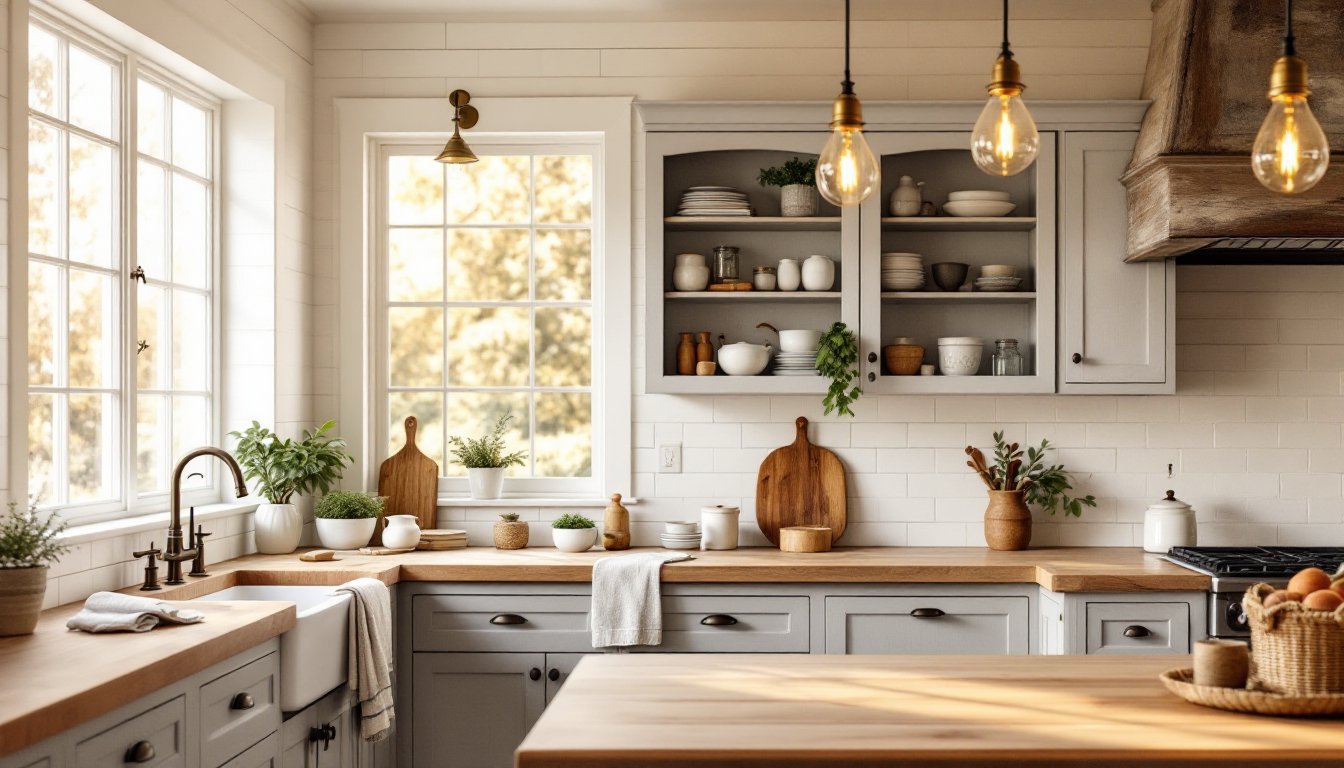
- Pair farmhouse grey cabinets with warm countertop materials like butcher block or grey quartz with veining, and choose traditional backsplash options like white subway tile or shiplap to maintain the cohesive farmhouse aesthetic.
- Hardware and lighting are critical finishing touches: select brass, oil-rubbed bronze, or black iron hardware and layer in warm (2700K) LED lighting to make grey cabinets feel cozy rather than sterile.
- Open shelving in farmhouse kitchens works well with grey cabinetry when backed by white or cream paint and styled with cookbooks, ceramics, and greenery to enhance the curated rustic look.
Why Farmhouse Grey Cabinets Are Trending Right Now
The Perfect Balance of Timeless and Contemporary
Farmhouse grey cabinets have staying power because they bridge two design worlds. Farmhouse style draws from 19th-century rural aesthetics, reclaimed materials, simple lines, authentic wear, while grey is a decidedly modern neutral. This combination avoids the dated feel of overly distressed finishes or the sterile look of pure contemporary minimalism. Grey cabinets with farmhouse details (like shaker panel doors, open shelving, or beadboard accents) feel both grounded and fresh.
Homeowners appreciate this blend because it won’t feel trendy in five years. The farmhouse aesthetic emphasizes function and longevity, while grey’s versatility ensures the kitchen adapts if your decor preferences shift. Many 63 rustic farmhouse kitchen ideas showcase grey as a sophisticated anchor that lets accent colors and materials take the spotlight.
Design Versatility and Neutral Appeal
Grey is the diplomatic shade. It plays well with warm whites, cool teals, warm wood tones, or bold accent colors. You’re not locked into a single direction, a kitchen with soft greige (grey-beige hybrid) cabinets can swing cozy-farmhouse or clean-modern depending on your countertops, hardware, and accessories.
This flexibility matters when you’re making a multi-year investment. Your cabinet color needs to work with lighting that changes throughout the day, flooring you’ll keep for a decade, and appliances you’ll eventually upgrade. Farmhouse grey delivers that neutrality without feeling bland because the finish texture, whether matte, satin, or lightly distressed, adds visual depth.
Choosing the Right Shade of Grey for Your Kitchen
Not all greys are created equal, and the wrong undertone can throw off your entire kitchen. When shopping, you’ll encounter three main grey families: cool greys (with blue or violet undertones), warm greys (with brown or taupe undertones), and true neutrals (little to no undertone shift).
Cool greys like dove grey or soft slate work beautifully if your kitchen receives bright natural light or has white trim and cool-toned countertops. They can feel crisp and clean, which pairs well with stainless steel appliances. Warm greys, think greige, warm taupe, or soft greyhound, complement wood flooring, warm countertops like granite or butcher block, and brass or bronze hardware.
Here’s the critical part: always view paint or cabinet samples in your actual kitchen at different times of day. Artificial lighting, natural sunlight from your windows, and nearby wall colors all influence how grey appears. Most cabinet manufacturers provide samples or allow you to request a cabinet door swatch to take home. Spend three days observing it before committing. Lighting changes everything, and a shade that looks perfect at noon might feel off in evening kitchen light.
Consider your kitchen’s existing fixtures too. If you’re keeping stainless steel appliances, warmer greys might clash: cool greys typically harmonize better. If you have natural wood cabinetry elsewhere in an open-plan space, choose a grey that echoes the warmth of that wood.
Popular Farmhouse Grey Cabinet Colors Explained
Several paint and cabinet finish lines have become farmhouse favorites. Sherwin-Williams Accessible Beige (SW 7036) is a warm greige that leans slightly taupe, it’s forgiving under mixed lighting and works with both cool and warm kitchen palettes. Benjamin Moore Healing Aloe (HC-171) is another go-to warm grey with subtle green undertones that feel organic without being trendy.
For cooler greys, Farrow & Ball Calluna is a soft, slightly mauve-grey that reads sophisticated without feeling cold. Benjamin Moore Kendall Charcoal (HC-166) sits in the medium-grey range, deeper than dove but lighter than charcoal, and offers real visual interest in farmhouse kitchens.
Cabinetry-specific finishes from manufacturers like Kraftmaid, Schrock, and Waypoint offer grey options with textures that enhance the farmhouse feel. Look for descriptions like “pewter,” “greystoke,” or “weathered grey” rather than clinical shade names. These finishes often include light distressing, which adds authenticity without overdoing the “rustic” aesthetic.
When comparing colors, remember that cabinet finishes reflect light differently than wall paint. A matte cabinet finish will look slightly darker and softer than the same grey in a glossy or semi-gloss wall paint. Request or order actual cabinet door samples from manufacturers, never rely on a paint chip alone. The finish texture, sheen, and how hardware reads against it all matter.
Pairing Farmhouse Grey Cabinets with Countertops and Backsplash
Countertops are your cabinets’ closest companion, and the pairing can make or break your design. Butcher block or live-edge wood countertops are classic with grey farmhouse cabinets, the warmth of wood grounds the grey and emphasizes the rural heritage of farmhouse style. Just budget for regular sealing (food-grade mineral oil or polyurethane), and accept that wood will age visibly.
Quartz or solid surface counters in white, cream, or light grey create a soft, cohesive look. If you want contrast, grey quartz with white veining or concrete-look quartz adds texture without competing with your cabinets. Laminate is a budget-friendly option: modern laminate mimics stone well, though durability doesn’t match pricier materials.
Granite or marble works if the stone contains grey tones or warm neutrals. Cold white counters might clash with warm grey cabinets, while grey stone cabinets echo and strengthen the design cohesion. Always view a full slab sample in your kitchen, not just a polished showroom sample.
For backsplash, brick, shiplap, or subway tile in white or cream are traditional farmhouse choices. Shaker-style tile (3×6 inch format) or 4×4 farmhouse tile in off-white or light grey extends the grey cabinet palette without feeling monotonous. Patterned tile or a mix of textures can add visual interest without clashing. Avoid anything too trendy or bold, the backsplash should support, not dominate. Resources like The Kitchn offer practical kitchen design guidance to navigate these pairing decisions.
Hardware, Lighting, and Finishing Touches
Hardware and lighting are where farmhouse grey cabinets truly come alive. Drawer pulls and knobs set the tone. Brass, oil-rubbed bronze, or black iron hardware feels authentic to farmhouse design and contrasts beautifully against grey. Stainless steel hardware reads more contemporary: use it if you’re blending farmhouse with modern elements. Ceramic or porcelain knobs add cottage charm. Avoid overly polished chrome, which can feel jarring.
Cabinet hardware isn’t just decorative, it affects usability. Knobs require less hand space: pulls work better on heavy drawers or if anyone in your household has limited grip strength. Test options in person before ordering in bulk.
Lighting transforms how grey reads. Warm (2700K) LED or incandescent bulbs make grey feel cozier: cool (4000K) lighting can make it feel sterile. Pendant lights over an island with brushed brass or blackened-brass finishes complement grey cabinets. Avoid harsh recessed lighting as the only source: layer in under-cabinet lighting (LED strips are affordable and dimmable) to warm the space and highlight countertops.
Open shelving is popular in farmhouse kitchens. If you’re pairing open shelves with grey cabinets, consider painting the interior back wall of shelves white, cream, or a soft complementary shade to create visual separation. Style shelves with cookbooks, ceramic pieces, and greenery to soften the look. Keep shelves organized, clutter reads as unintentional, not farmhouse-curated.
Backsplash lighting and small accents matter too. A wood hood vent above the stove, vintage-style faucet hardware, or apron-front sink reinforces the farmhouse narrative without requiring a full redesign. Add texture with a runner rug, linen towels, and natural fiber baskets tucked into lower cabinet spaces.