Table of Contents
ToggleThe refrigerator door shelf takes a beating. It’s where condiment bottles rattle, where jars slide around every time someone opens the door, and where the cold hits hard, sometimes unevenly. On a Frigidaire refrigerator, that door shelf needs to handle weight, humidity changes, and constant temperature fluctuations. Whether you’re dealing with a cracked shelf, loose brackets, or just want to upgrade, understanding how to maintain or replace your Frigidaire refrigerator door shelf saves money and prevents food waste. This guide walks you through everything from identifying the problem to swapping in a new shelf without calling an appliance repair person.
Key Takeaways
- Frigidaire refrigerator door shelves commonly fail due to cracking, loose clips, and warping caused by temperature fluctuations and weight stress, but most issues can be solved with a replacement shelf and basic tools.
- Identify your exact Frigidaire model number before ordering a replacement door shelf, as shelves are not universal across different refrigerator models and configurations like French door or side-by-side layouts.
- Remove a Frigidaire door shelf by identifying whether it uses snap-fit clips (push to release) or screw-mounted brackets (remove screws), then lift gently while supporting with both hands to avoid damage.
- Extend your door shelf lifespan by cleaning every two weeks, avoiding overloading beyond the 5–10 pound capacity, keeping the door gasket clean, and never placing hot items directly on the shelf.
- Genuine Frigidaire replacement shelves cost $40–$120 depending on design, while aftermarket options run $25–$70, but always verify the clip type and width match your specific model before purchasing to ensure a proper fit.
Understanding Your Frigidaire Door Shelf Design
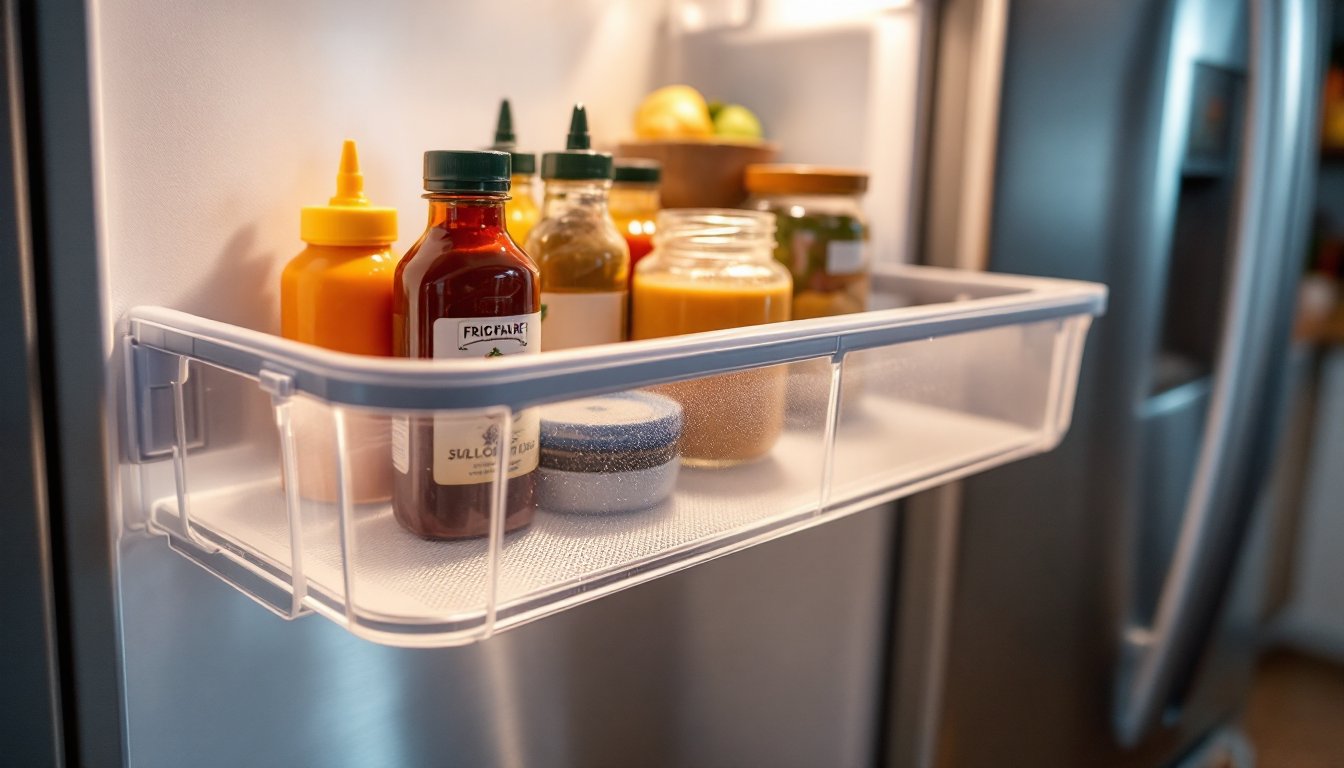
Frigidaire refrigerators come in several door shelf designs depending on the model year and door style (French door, side-by-side, or top-freezer). Most shelves are molded plastic with reinforced edges and a lip to prevent items from sliding. The shelves sit on plastic clips or metal brackets that are anchored to the door frame itself.
On newer Frigidaire models, shelves often feature a plastic composite material that’s both lightweight and durable, with subtle texture to improve grip. Older models used straight plastic without as much reinforcement. The clips holding the shelf are either snap-fit (you pop them in and out) or screw-mounted (more stable but less convenient for cleaning).
The door seal around the shelf opening matters too. A rubber gasket runs along the door frame, and if the shelf doesn’t sit flush against it, cold air escapes. This is why a warped or damaged shelf doesn’t just look bad, it affects your fridge’s efficiency. Take a moment to identify your exact Frigidaire model number (usually inside the door frame or on the back) before ordering a replacement, because door shelves aren’t universal across all Frigidaire refrigerators.
Common Issues With Frigidaire Door Shelves
The most common Frigidaire door shelf problem is cracking. Plastic shelves expand and contract with temperature swings, and over time, stress points develop, usually at the corners where the lip meets the main shelf body. A small hairline crack can grow quickly, especially if you’re resting a heavy jar on that spot.
Second is loose or broken clips. The clips that hold the shelf to the door frame can break if someone yanks the shelf out too hard or if the door is slammed repeatedly. You’ll notice the shelf sagging on one side, or it rocks when you push on it gently. Brackets can also corrode if moisture gets between the clip and the metal door frame, making them impossible to grip the shelf securely.
Third is discoloration or permanent staining, usually from spilled condiments or juice. While this is cosmetic, it can harbor bacteria if not cleaned properly. Finally, warping happens when a shelf is exposed to direct heat or sits in sunlight near a window, rare in fridges, but possible if the appliance is in a sunroom. Frigidaire refrigerator reviews often mention door shelf durability across different model generations, so checking real user feedback on your specific model can help you decide whether a repair or replacement is worth the investment.
How To Remove And Replace Your Door Shelf
Step-By-Step Removal Process
Before you start, empty the shelf completely and wipe away any spills or debris. This prevents mess and lets you see the clip mechanisms clearly.
-
Identify the clip type. Look at the underside and sides of the shelf. If you see plastic tabs or levers, they’re snap clips, push or squeeze them to release. If you see screws, use a Phillips head screwdriver to back them out (usually two to four screws per shelf).
-
Lift and angle the shelf. For snap-clip shelves, gently lift the front edge while pushing back slightly. The shelf should slide forward and up. Support the shelf with both hands to avoid dropping it, cracked plastic can be sharp, and a heavy shelf can pinch fingers.
-
Check the door frame for damage. Once the shelf is out, inspect the clips or bracket holes for cracks, rust, or stripped threads. If a clip is broken, you’ll need to order a replacement clip kit along with the shelf, or just order the complete assembly.
-
Clean the door frame. Wipe down the area where the shelf sits. Dust, food particles, and old gasket residue can prevent a new shelf from seating properly.
Installation Tips For Your New Shelf
-
Align the shelf with the clips first. Don’t force it. The shelf should slide in smoothly if the clips are correctly positioned. If they’re not aligned, loosen or reposition the clips slightly, they often have a bit of play.
-
For snap-fit shelves, push until you hear a click. That click tells you the shelf is locked in. Gently tug downward to confirm it’s secure.
-
For screw-mounted shelves, hand-tighten the screws first. Once all screws are snug, use your screwdriver to tighten firmly, not hard enough to crack the plastic, but firm enough that the shelf doesn’t rock side-to-side.
-
Check the gasket seal. The rubber door gasket should press evenly against the shelf. If the shelf tilts or sits high on one side, adjust the clip height or loosen the screws and reseat the shelf.
-
Load it carefully. Don’t max out the shelf with weight immediately. Start with lighter items for the first week to ensure the new clips bed in correctly.
Maintenance Best Practices To Extend Shelf Life
Clean your Frigidaire door shelves every two weeks to prevent mold and bacterial growth. Remove each shelf and wash it with warm soapy water and a soft brush, avoid abrasive scrubbers that can scratch and weaken the plastic. Dry thoroughly before reinstalling.
Don’t overload a single shelf. Frigidaire door shelves are rated for specific weight capacities (usually 5–10 pounds per shelf, depending on the model). Check your manual or product documentation to know your limit. Distributing weight across multiple shelves prevents permanent warping.
Keep the door gasket clean so it seals properly. A compromised seal means the door shelf area gets warmer, which accelerates plastic degradation. Wipe the gasket with a damp cloth every month.
Avoid placing hot items on the shelf. If you’ve just pulled something from the stove, let it cool to room temperature before storing it. Extreme heat can warp plastic permanently.
Check the clips or brackets quarterly. If you notice any cracks in the plastic clips, order a replacement kit now before the shelf fails. Home organization tips often recommend rotating and reorganizing fridge contents anyway, use that opportunity to inspect the shelves for damage. If you’re storing heavy or oddly shaped items (like large platters or gallon jugs), consider a lower shelf instead of the door, which experiences more movement and temperature fluctuation.
Finding The Right Replacement Parts
When you’re ready to order a replacement shelf, grab your Frigidaire model number. It’s typically located on a sticker inside the door frame, on the back wall near the floor, or in the lower left corner of the fridge interior. Write it down.
Then search for “Frigidaire [model number] door shelf” on the manufacturer’s website, Amazon, or appliance parts retailers like Appliances Connection or Repair Clinic. Genuine Frigidaire shelves are more reliable than aftermarket alternatives, though aftermarket options exist and are usually cheaper. If budget is tight, aftermarket shelves work fine, just check the reviews and confirm the dimensions match your model before ordering.
Cost varies by model. A genuine Frigidaire shelf typically runs $40–$120, depending on the design and whether it includes clips. Aftermarket options may range from $25–$70. Shipping can add $10–$20, so factor that in.
If you find a shelf listed as “compatible” but not specifically for your model, measure carefully. Door shelves aren’t interchangeable, a shelf built for a French-door Frigidaire won’t fit a side-by-side model. Best French door refrigerators often detail door shelf features in their reviews, which can help you understand what options Frigidaire offers if you’re comparing models or upgrading. Always verify the clip type (snap or screw) and the width before checking out. Most retailers accept returns within 30 days if the shelf doesn’t fit or arrives damaged.