Table of Contents
ToggleA noisy refrigerator can be unsettling, especially when the humming, buzzing, or grinding noise starts at odd hours. If you’ve caught yourself wondering why your refrigerator is making a loud noise, you’re not alone, and the good news is that many causes are fixable without a service call. Some sounds are completely normal operation: others signal a worn compressor or blocked airflow that needs attention. This guide walks you through the most common culprits behind a loud refrigerator and the troubleshooting steps a homeowner can take to diagnose and sometimes resolve the problem.
Key Takeaways
- Distinguish between normal refrigerator sounds (humming, soft clicks, air circulation) and concerning noises (loud grinding, persistent buzzing, or sudden rattling) to determine if service is needed.
- Compressor and motor issues, including grinding sounds or difficulty starting, often indicate wear or loose mounting brackets and typically require professional repair with costs exceeding $800–1,500.
- Cleaning condenser coils annually using a coil brush is a simple DIY task that resolves many loud refrigerator complaints and prevents noise issues before they start.
- Fan malfunctions—whether the evaporator or condenser fan—cause squealing or rattling and usually need technician replacement if the bearing is worn or blade is damaged.
- Check your refrigerator’s level (should tilt forward slightly at 0.25 inches), inspect for obstructions around vents, and listen during the compressor cycle to identify the noise source before calling for professional help.
- If noise persists after basic troubleshooting or if cooling performance declines alongside increased sound, contact a licensed technician, as internal components may be failing.
Normal Operating Sounds vs. Concerning Noises
Before panicking, understand what a refrigerator is supposed to sound like. A normal hum from the compressor running is expected, this is the motor working to cool your fridge. You may also hear occasional clicks (the thermostat signaling a temperature change) or a soft whoosh of air circulating through vents. These are all part of healthy operation.
Concerning noises are those that are noticeably louder, more frequent, or have changed suddenly. A loud grinding sound, persistent buzzing that goes beyond normal operation, or a rattling that didn’t exist before warrant investigation. The key distinction: does the noise seem like normal operation amplified, or is it genuinely different from what you remember hearing when the unit was new?
Pay attention to when the noise occurs. If the loud refrigerator sound only happens during the compressor cycle, it’s likely a motor or compressor issue. If it’s constant or intermittent regardless of the cooling cycle, you may be dealing with a fan or circulation problem. This timing clue narrows your troubleshooting considerably.
Compressor and Motor Issues
The compressor is the heart of your refrigerator, working hard to pump refrigerant and maintain cold temperatures. As it ages, vibration increases and sounds intensify. A rattling or grinding noise often points to compressor wear or a mounting bracket that’s come loose.
The Compressor Cycling Pattern
Your compressor cycles on and off throughout the day, typically running 8–15 minutes per cycle, depending on room temperature and door openings. During startup, the motor may produce a momentary hum or slight click as it engages: this is normal. But, if the compressor takes several attempts to start or produces a prolonged grinding before it smooths out, the motor may be weakening.
A failing compressor can also cause the fridge to struggle cooling. If you notice the interior isn’t as cold as it should be and the noise is increasing, cooling performance is likely declining. This is not a DIY fix, compressors require specialized tools and refrigerant handling, so a professional is necessary. The cost of replacement is steep, so this is worth assessing sooner rather than later. Check if your unit is still under warranty: some refrigerators offer 5–10 year compressor warranties.
Fan Malfunctions and Air Circulation Problems
Refrigerators contain two main fans: the evaporator fan (inside the fridge, moving cold air) and the condenser fan (outside, near the compressor, expelling heat). Either fan can wear out or become obstructed, causing a loud whirring, squealing, or rattling sound.
A squealing noise often signals a fan motor bearing drying out or a blade striking something. A rattling usually means the fan blade has hit debris or loosened in its housing. If the noise is coming from inside the fridge, it’s likely the evaporator fan: from the back or underneath, it’s probably the condenser fan. Some refrigerators let you access and inspect these fans yourself, check your manual for the location and removal process. Look for ice buildup, dust, or a loose blade. Clearing ice or dust can sometimes restore quiet operation. But, if the bearing is worn or the blade is damaged, fan replacement is needed, and this is generally a technician’s job.
Evaporator and Condenser Coil Buildup
Dust and lint accumulation on the condenser coils, metal tubes on the back or underneath the fridge, forces the motor to work harder and run longer, making everything noisier. Over time, this buildup becomes severe enough to impact cooling efficiency and create a loud hum or buzzing sound.
The evaporator coils (inside the fridge) can also frost over if the defrost cycle isn’t working properly, restricting airflow and causing the system to strain. A frozen evaporator coil often produces a loud whirring as the fan tries to push air through the blockage.
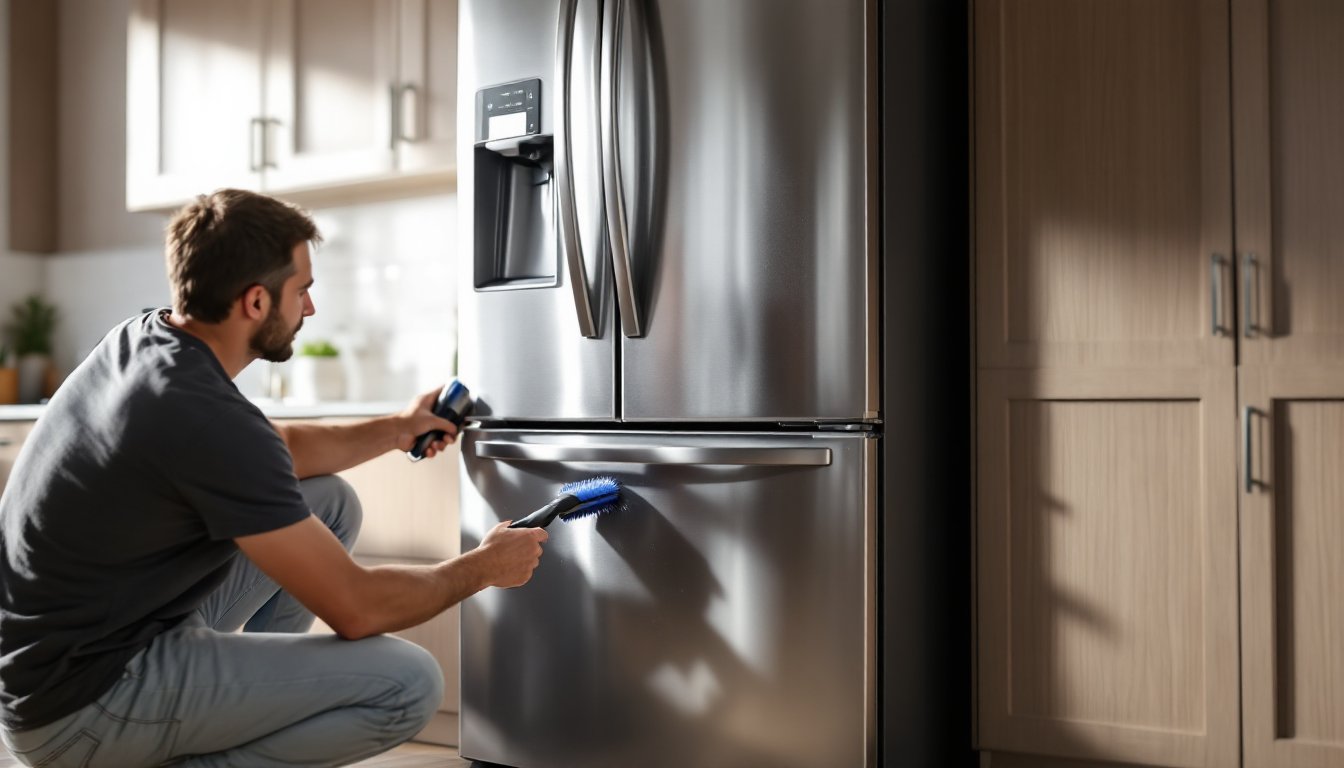
Cleaning the condenser coils is a straightforward DIY task. First, unplug the refrigerator. Most refrigerators have removable kick plates at the bottom: slide this off to access the coils. Use a coil brush (a long, narrow brush sold at hardware stores for $10–15) or a vacuum with a brush attachment to gently remove dust. Avoid pressing hard or bending the fragile coil fins. After cleaning, plug the unit back in and listen for a reduction in noise over the next few hours as the compressor cools more efficiently. If frost buildup is the issue, the defrost thermostat or heater may need professional attention.
Simple DIY Troubleshooting Steps
Before calling a technician, run through these steps to narrow down the problem and potentially fix it yourself.
-
Identify the noise type. Is it humming, grinding, squealing, rattling, or clicking? Record a short video or audio clip on your phone: this helps a technician diagnose over the phone if you do decide to call one.
-
Check the location. Listen closely to determine whether the sound comes from inside the fridge, the back, or underneath. This tells you which component is likely the culprit.
-
Inspect for obstructions. Look underneath and behind the refrigerator for debris, papers, or items that might vibrate against the unit. Clear any clutter around the exterior vents.
-
Clean the condenser coils. As noted above, use a coil brush and your vacuum to remove dust from the condenser coils. This single step resolves many noise complaints. If you’re not comfortable accessing this area, skip to the next step.
-
Check if the fridge is level. A refrigerator that tilts forward slightly (about 0.25 inches) helps water drain properly and reduces vibration. Use a level on the front edge and adjust the feet if needed, most fridges have adjustable front feet or roller wheels.
-
Listen to the compressor cycle. Run the fridge for one full cycle (typically 10–20 minutes). If noise increases noticeably as the compressor cycles, document this observation for a repair technician.
-
Verify the freezer’s defrost cycle. Check inside the freezer for excessive ice buildup. If you see a thick layer, the automatic defrost may be failing, this is a job for a pro.
According to appliance maintenance guides, cleaning condenser coils annually prevents many common noise issues and extends the lifespan of your unit.
When to Call a Professional Repair Technician
Some situations clearly call for professional help. If your troubleshooting confirms any of the following, contact a licensed appliance repair technician:
- Compressor grinding or struggling to start. This points to motor failure, which is not DIY-safe due to electrical and refrigerant hazards.
- Fan squealing or metal-on-metal sounds. Bearing failure or blade damage requires proper replacement and alignment.
- Persistent noise after coil cleaning and leveling. If simple fixes don’t work, internal components may be failing.
- Cooling performance is declining alongside increased noise. This combination suggests the compressor or refrigerant system is compromised.
- Frost buildup in the freezer that won’t clear. A faulty defrost heater or thermostat needs professional diagnosis and repair.
Repair costs vary by issue. Coil cleaning runs $100–150 if you hire someone: a fan replacement costs $200–400: compressor replacement often exceeds $800–1,500 depending on the refrigerator model. For units over 10 years old, consider whether repair costs justify replacement. A new refrigerator typically offers better energy efficiency and a fresh warranty.
When calling for service, describe the noise type, when it occurs, and any steps you’ve already taken. Family Handyman’s appliance troubleshooting articles offer additional context if you want to research your specific fridge model. Get quotes from at least two technicians and ask what your warranty covers before committing to a repair.