Table of Contents
ToggleA burst pipe at 2 a.m., a leaking water heater, or a catastrophic plumbing failure, these scenarios are every homeowner’s nightmare. When water damage is spreading through your home, seconds matter. Knowing how to shut off the water quickly is the difference between a minor repair and a five-figure disaster. A water meter shut off valve tool is the unsung hero that makes this possible. Unlike fumbling with wrenches or searching for the main valve in a panic, having the right tool on hand means you can stop the water flow in minutes. This guide walks you through what these tools are, why you need one, and how to use it effectively.
Key Takeaways
- A water meter shut off valve tool can stop water flow in minutes and prevent thousands of dollars in damage during plumbing emergencies like burst pipes or leaking water heaters.
- The most common water meter shut off valve tool is a T-handle meter key with a 5/8-inch socket, costing $15–$50 and compatible with the majority of residential systems in North America.
- Proper technique for using a meter key involves locating the square valve stem, inserting the socket smoothly, and rotating clockwise exactly 90 degrees without forcing the valve shut.
- Store your meter key visibly on or near your water meter box and ensure all household adults know its location and how to use it before a plumbing crisis occurs.
- Before purchasing a meter key, confirm your valve’s size by checking your meter box in person, as buying the wrong size leaves you without protection during emergencies.
What Is A Water Meter Shut Off Valve Tool?
A water meter shut off valve tool, also called a meter key, water key, or water valve key, is a simple, T-shaped or cross-shaped device designed specifically to operate the shut-off valve located at your water meter. Most municipal water systems install the valve below ground level or inside a utility box, requiring a specialized tool to reach and turn it. A standard wrench won’t fit because the valve stem is usually recessed deep in the meter box.
These tools are typically made from metal (aluminum or steel) or heavy-duty plastic and measure around 3 to 4 feet long. The design is straightforward: a long shaft with a square socket or wrench head at one end that matches your specific meter valve. When you insert the tool into the meter box and turn it 90 degrees, you’re rotating the valve stem that controls water flow from the street into your home. It’s one of the most economical emergency tools a homeowner can own, usually costing between $15 and $50, and it could save you thousands in water damage.
Why Every Homeowner Should Have One
Plumbing emergencies don’t give you time to call a plumber and wait. A ruptured supply line, a malfunctioning water heater, or a failed sump pump can dump hundreds of gallons into your basement before help arrives. The faster you shut off the water, the less damage occurs and the lower your insurance claim or out-of-pocket repair costs.
Without a water shut off valve tool, you’re left scrambling to find your home’s main shut-off valve, which might be in an attic, crawl space, or buried under landscaping. Some older homes don’t have easily accessible valves at all. Having a meter key near your water meter means you can act in seconds rather than minutes. It’s the plumbing equivalent of a fire extinguisher, simple, inexpensive, and invaluable when disaster strikes. Professional plumbers often recommend keeping one visible (mounted on the meter box itself or nearby) so anyone in the household can use it in an emergency.
Types Of Water Meter Shut Off Valve Tools
Water meter shut off valve tools come in a few standard configurations, each matching different valve designs found in various regions and municipal systems.
T-Handle Meter Keys are the most common. They feature a long shaft with a T-shaped handle at the top and a square socket (usually 5/8-inch or 3/4-inch) at the bottom. This design provides good leverage and is easy to grip, even with gloves or wet hands.
Cross-Handle or Plus-Handle Keys look like a cross or plus sign and offer 360-degree grip options. They’re useful if you’re in tight spaces where a T-handle might catch on the meter box rim.
Adjustable Meter Keys have a sliding or adjustable socket to fit different valve stem sizes. These work if you’re uncertain about your valve size or moving to a new property.
Heavy-Duty Aluminum or Steel Keys are built for durability and frequent use, ideal if you have multiple properties or live in an older home with stubborn valves. Plastic keys are lighter and adequate for most residential applications but may crack under extreme force.
Before buying, contact your local water utility or check your meter box to confirm your valve’s size. A 5/8-inch socket fits most residential systems, but some areas use 3/4-inch or other dimensions. Buying the wrong size wastes money and leaves you helpless in an emergency.
How To Use A Water Meter Shut Off Valve Tool
Using a meter key is straightforward, but proper technique ensures you don’t damage the valve or injure yourself. The process takes only a few minutes once you locate the meter.
Step 1: Locate Your Water Meter and Valve
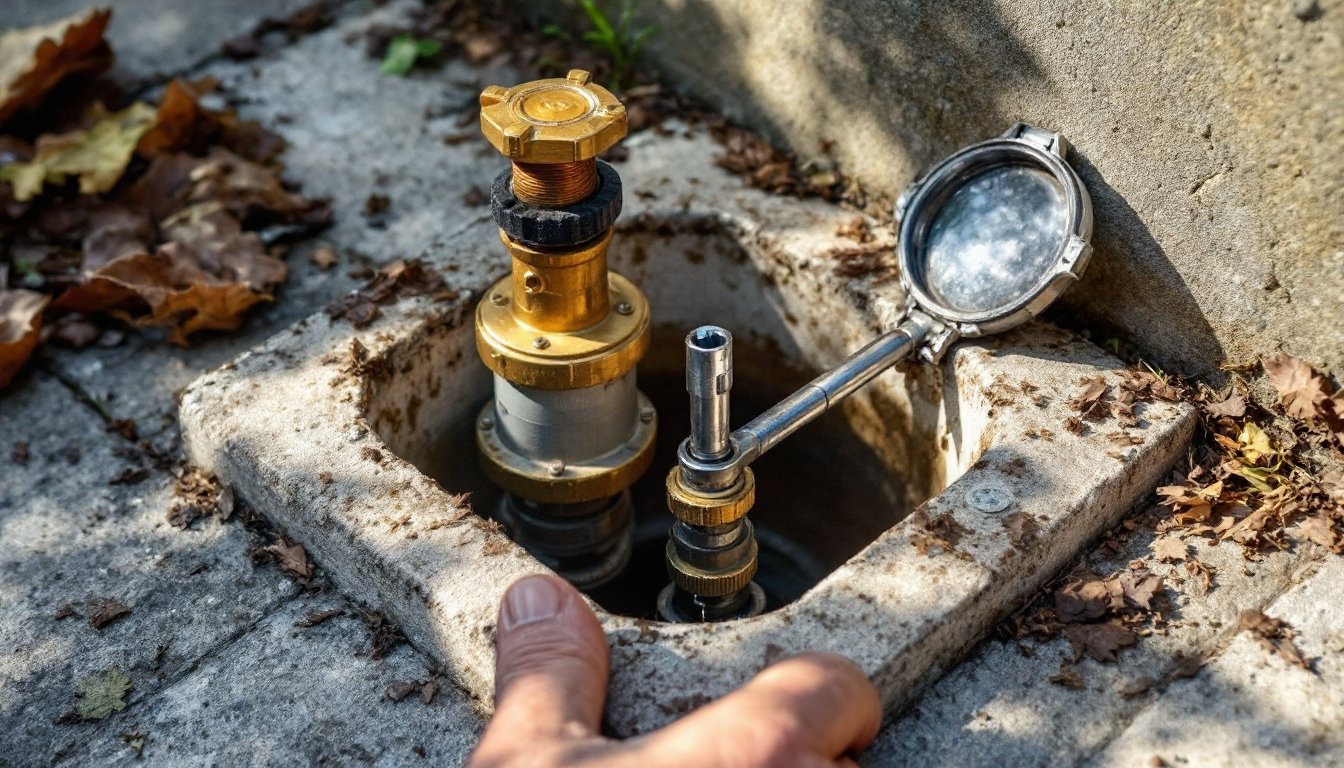
Your water meter is typically located near the property line, often in a concrete box at the street or sidewalk. Some homes have meters inside a garage, basement, or utility room. Open the box (use a flat-head screwdriver if it’s stuck) and look inside. You’ll see the meter itself (a brass or plastic cylinder with dials) and the shut-off valve directly below or beside it. The valve stem is a square or hexagonal fitting recessed into the meter box.
Step 2: Insert the Meter Key
Align your meter key’s socket with the valve stem square. Push downward and inward with steady pressure, don’t force it. The key should slide over the stem smoothly. If it doesn’t fit, double-check that you have the correct size.
Step 3: Turn the Valve 90 Degrees
Once seated, rotate the key clockwise (when viewed from above) a quarter turn, 90 degrees. You’ll feel slight resistance as the valve closes. Stop at the 90-degree position: don’t over-rotate or force the valve shut, as this can damage the stem or valve internals. A properly closed valve requires only firm, steady pressure, not brute force.
Step 4: Verify the Shutoff
Go inside and open a faucet. Water should stop flowing within seconds. If it still runs, the valve may not be seated fully, or you may have turned it in the wrong direction. Return to the meter and try the opposite direction.
Important Note: When re-opening the valve, turn counter-clockwise. Open it slowly (about a quarter turn) to avoid water hammer, a loud banging in the pipes that can damage fittings. This is especially important if the water has been off for several hours or days.
Choosing The Right Tool For Your Needs
Selecting a meter key depends on your meter’s size, your physical ability, and how often you expect to use it. For most homeowners, a standard T-handle 5/8-inch aluminum meter key checks all boxes: affordable, durable, and compatible with the majority of municipal systems in North America.
If you have mobility issues or limited hand strength, consider a longer or cross-handle design, which requires less torque. If you own multiple properties or know your valve is stubborn (from previous experience), invest in a heavy-duty steel key, the extra cost ($25–$50) is worth avoiding stripped or bent stems.
Where you buy matters too. Big-box hardware stores (Home Depot, Lowe’s) stock generic meter keys in the plumbing section. Specialty plumbing supply shops often have a wider range and staff who can confirm your valve size. Online retailers offer convenience but no in-person verification.
Before purchasing, locate your meter and confirm the valve stem size. Take a photo of the valve and the meter box dimensions if possible, so the store associate can verify compatibility. Some utilities even provide free or subsidized meter keys to customers, a quick call to your local water department might save you money.
Storage is simple: keep the key visible and accessible. Mount it directly on the meter box using a weatherproof clip or hook, store it in a utility cabinet near your water heater, or place it in a kitchen drawer labeled clearly. Homeowners often hide tools “somewhere safe” and forget where, prominently visible storage ensures someone can grab it during a crisis. Recent guides on how to shut off the water to your house and resources on how to turn off your water main emphasize the importance of knowing your meter location beforehand, not during an emergency. Also, learning how to find your water shutoff valve in advance saves critical time.
Conclusion
A water meter shut off valve tool is an inexpensive insurance policy against catastrophic water damage. For under $30 and five minutes of installation, you gain the ability to stop water flow within seconds during a plumbing emergency. Don’t wait for a crisis to learn where your meter is or fumble with the wrong tool. Buy the correct size, store it visibly, and make sure every adult in your household knows how to use it. When disaster strikes at 2 a.m., you’ll be grateful you did.