Table of Contents
ToggleA refrigerator is more than just a box that keeps food cold, it’s often the centerpiece of a modern kitchen, and if you’re serious about luxury appliances, Gaggenau refrigerators deserve your attention. Built by the German manufacturer with over 300 years of heritage in premium appliances, Gaggenau has carved out a reputation for blending engineering precision with sleek design. These aren’t budget buys: they’re investments in kitchen functionality and aesthetic appeal that can transform how a space looks and performs.
Key Takeaways
- Gaggenau refrigerators compete on quality and design sophistication, offering modular, customizable cooling solutions with advanced features like TwinNormal technology that prevent flavor transfer and extend food freshness.
- Built-in integration is the defining strength of Gaggenau refrigerators—fully integrated models sit flush with custom cabinetry and virtually disappear into the kitchen landscape, requiring precise planning and a 12–16 week lead time for custom orders.
- Precision temperature control and humidity management systems outperform standard refrigerators, with multizone compartments and granular humidity controls that keep temperature variances under ±1°C and prevent produce from wilting or drying out.
- A Gaggenau refrigerator typically costs $8,000–$15,000 for a 24-inch integrated model, making it 3–4 times the price of mid-range brands, but justifiable as a 15–20 year investment if you’re renovating a high-end kitchen or cook seriously.
- Gaggenau’s engineering delivers measurably quieter operation (38–42 decibels versus 45–50 for standard units) and Energy Star-certified efficiency around 600–750 kWh annually, with sealed cooling systems using environmentally friendly refrigerants.
- The investment in a Gaggenau refrigerator makes the most sense for long-term homeowners in luxury kitchens, while budget-conscious buyers may find better overall kitchen value in mid-range appliances paired with upgraded cabinetry and lighting.
What Makes Gaggenau Refrigerators Stand Out
Gaggenau refrigerators aren’t competing on price, they’re competing on quality, innovation, and design sophistication. Unlike mainstream brands churning out similar models year after year, Gaggenau focuses on modular, customizable cooling solutions tailored to high-end kitchens. The brand uses precision-engineered compressors, advanced humidity controls, and thoughtful internal layouts that make a measurable difference in how long produce stays fresh.
The real distinction lies in their commitment to integrating seamlessly into custom kitchens. Rather than forcing your kitchen design around the fridge, Gaggenau lets you build the fridge into your kitchen. Their modular approach means you can spec out exactly what you need, whether that’s a wine cooler paired with a separate refrigerator unit, or a built-in model with custom paneling that matches your cabinetry.
They’ve also pioneered features many competitors haven’t yet adopted at scale. For instance, their TwinNormal cooling technology maintains precise temperatures in separate compartments, preventing flavor transfer and letting you store different foods at their ideal conditions. Many homeowners appreciate this level of control because it genuinely extends food lifespan and reduces waste.
Design and Aesthetics: Integrating Luxury Into Your Kitchen
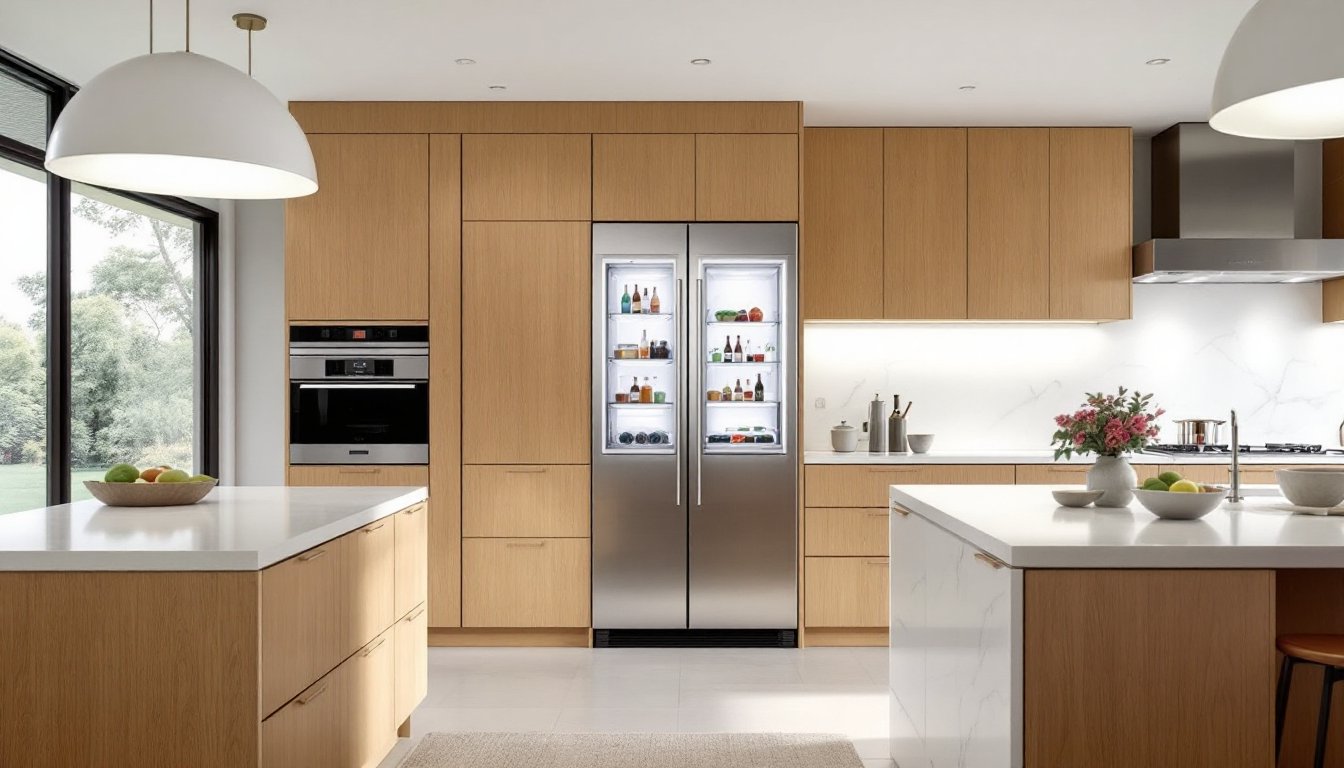
The visual appeal of a Gaggenau refrigerator starts with its minimalist construction. Most models feature flush-mounted door handles, stainless steel or custom panel finishes, and clean lines that feel more like architecture than appliance design. A fully integrated Gaggenau model sits perfectly flush with your cabinet cabinetry, no awkward gaps, no visual clutter.
Unlike freestanding appliances that command visual attention, integrated Gaggenaus dissolve into the kitchen landscape when finished with matching cabinet panels. This matters if you’ve invested in custom millwork: a mismatched appliance can undo all that design work. Gaggenau’s paneling options let you match wood grain, color, and style so the refrigerator virtually disappears.
Built-In Integration and Customization Options
Gaggenau offers multiple installation configurations: fully integrated, semi-integrated (with a visible handle and trim), and freestanding. For a kitchen undergoing serious renovation, the fully integrated RX models are the gold standard, they’re designed from the ground up to nest into custom cabinetry. You’ll need precise cutout dimensions and proper ventilation space (typically 2–3 inches on sides and back), so working with a contractor or kitchen designer isn’t optional: it’s essential.
Customization extends beyond appearance. Interior finishes include stainless steel or glass shelving, adjustable storage zones, and removable drawers that can be repositioned depending on what you’re storing. Some models include a separate wine storage compartment with dedicated cooling and humidity control, which matters if you keep a modest wine collection. Your kitchen designer or the retailer will help spec the right configuration, but you should know that lead times can stretch 12–16 weeks for custom orders, especially if cabinet panels need fabrication.
Key Features and Cooling Technology
Gaggenau’s engineering philosophy centers on consistency and reliability. Their compressors operate more quietly than most refrigerators because they’re engineered to vibration standards you’d expect in luxury appliances. The noise level typically ranges from 38–42 decibels, which is perceptibly quieter than standard units running at 45–50 decibels. If your kitchen is open to living spaces, this matters.
Energy efficiency has improved dramatically in recent Gaggenau models. Most current units carry Energy Star certification and use around 600–750 kWh annually, depending on size and configuration. That’s competitive with premium brands, though it’s worth noting that integrated refrigerators often run slightly higher than freestanding counterparts because they work harder to cool without proper airflow around the unit.
Their sealed cooling system uses environmentally friendly refrigerants (typically R600a isobutane) and operates with electronic controls rather than mechanical thermostats. You’re getting precision, not guesswork. Recent reviews from specialists mention that Gaggenau’s temperature stability keeps variances under ±1°C, which makes a real difference in food preservation.
Precision Temperature Control and Food Preservation
Inside, Gaggenau’s zoning system is where the real value emerges. The MultiZone compartment lets you set different temperatures in different sections, crucial if you’re storing proteins, vegetables, and deli meats simultaneously. You might run the protein zone at 32°F while keeping produce at 38–40°F, all in the same unit.
Their humidity controls are more granular than typical refrigerators. Instead of a simple lever marked “low” to “high,” Gaggenau units let you dial in specific humidity levels, which helps prevent leafy greens from wilting or root vegetables from drying out. This is especially valuable if you shop at farmers’ markets or buy produce in bulk.
According to detailed testing on platforms like The Kitchn, high-end refrigerators with these compartmentalization features consistently outperform standard models in preserving produce freshness over a two-week storage window. You’re also getting better ice quality from dedicated ice-making compartments and quieter defrost cycles that don’t interrupt your kitchen peace.
Is a Gaggenau Refrigerator Worth the Investment
This is the million-dollar question, and the answer depends on your situation. Gaggenau refrigerators typically cost $8,000–$15,000 for a standard 24-inch integrated model, with prices climbing if you add wine storage, extra zones, or full-height configurations. That’s roughly 3–4 times the cost of a mid-range refrigerator from brands like LG or Bosch.
The case for investment: If you’re renovating a high-end kitchen, you’re already spending $50,000–$150,000+ on the project. A Gaggenau refrigerator is 5–15% of that budget and will last 15–20 years if maintained properly. It won’t wear out like cheaper appliances, won’t become visually dated thanks to its timeless design, and genuinely performs better at food preservation. If you cook seriously, entertain regularly, or simply hate waste, the lifespan and performance justify the cost.
The case against: If you’re in a modest kitchen, replacing a functional appliance, or budget-conscious, a Gaggenau is difficult to justify. The same $12,000 spent on a quality mid-range refrigerator, upgraded cabinetry, and better lighting might deliver more overall kitchen satisfaction. Recent reviews of the Gaggenau 400 Series highlight reliability and design, but they also acknowledge the premium pricing isn’t accessible to everyone.
Resale value is another angle. Homes with Gaggenau appliances do command slightly higher appraisals in luxury markets, but the multiplier isn’t dramatic, you won’t recover the full cost difference if you sell in 5 years. But, if you plan to stay long-term, it’s less of a financial calculation and more of a quality-of-life decision.
For detailed performance comparison, the Gaggenau RX491711 review breaks down reliability metrics and styling choices against competing premium options. It’s worth reading if you’re seriously considering the investment.
Conclusion
Gaggenau refrigerators represent a deliberate choice for homeowners who value precision engineering, timeless design, and long-term reliability. They’re not for everyone, and they shouldn’t be, but if you’re building or renovating a serious kitchen and want an appliance that integrates seamlessly, performs better, and lasts longer, they’re worth the conversation. Start by sketching your kitchen layout, confirm your available space and power requirements, and connect with a kitchen designer or Gaggenau dealer. Lead times are real, but the result is worth the wait.